

How to Determine the Right Wax Ring Size for Your Toilet
A leaking toilet can waste thousands of gallons of water every year, driving up your water bill and causing hidden damage to your floors. One of the most important parts of a successful toilet repair is choosing the correct wax ring size.
If the wax ring doesn’t fit properly, water and sewer gases can escape from the base of the toilet. That can lead to odors, floor damage, and costly repairs down the road. The good news is that choosing the right size is easier than most homeowners think.
Danco has helped homeowners simplify toilet repairs for decades with easy-to-install plumbing solutions designed to help you fix it, not replace it.
Jump To Section
Wax Ring Sizes
What Size Wax Ring Does Most Toilets Use?
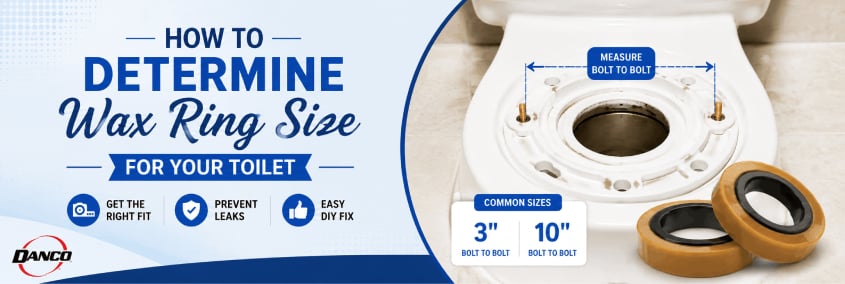
Most toilets use either a 3-inch or 4-inch wax ring. To find the correct size, you’ll measure the drain opening on the bottom of the toilet and check the height of the toilet flange beneath it.
Getting the right fit creates a secure seal that prevents leaks and keeps your bathroom working properly.
Why It Matters
Why Wax Ring Size Matters
The wax ring sits between the toilet and the drain pipe, creating a watertight seal every time the toilet is flushed. If the ring is too small, too large, or the wrong thickness, the seal may fail and let water leak onto the floor.
Over time, even a small leak can cause serious damage beneath the toilet, especially if it goes unnoticed. Common problems caused by the wrong wax ring size include:
Water leaking around the base of the toilet
Sewer odors coming from the bathroom
A loose or rocking toilet
Damage to flooring and subfloor materials
Mold or moisture buildup over time
Choosing the right wax ring size the first time helps you avoid repeat repairs and protects your bathroom from expensive water damage.
How To Measure
How Do You Measure a Toilet Wax Ring?
There are two important factors to consider when choosing a toilet wax ring: width and thickness. Both are simple to check and take only a few minutes. To get an accurate width reading you may need to carefully turn the toilet on its side, and a few small adjustments while you are in there can also improve your toilet’s performance.
Measuring before you shop can save time and prevent installation problems later.
Standard Sizing
What Size Wax Ring Does a Standard Toilet Need?
Most residential toilets use a standard 3-inch or 4-inch wax ring paired with a regular-thickness seal. Flooring changes, tile installation, or flange height can affect which option works best.
If new flooring has been added to the bathroom, the flange may sit lower than before. In those cases, an extra-thick wax ring can compensate for the gap and improve the seal. When in doubt, measuring both the toilet opening and the flange height is the best way to choose the correct fit and avoid future leaks.
When To Replace
Signs Your Toilet Wax Ring Needs Replacing
Wax rings don’t last forever. Over time they can dry out, crack, or lose their seal, especially if the toilet shifts or becomes loose. If your toilet is showing signs of leakage or movement, the wax ring may need to be replaced. Common signs of a failed wax ring include:
Water pooling around the base of the toilet
Sewer odors in the bathroom
Toilet rocking or shifting during use
Soft or stained flooring near the toilet
Water spots on ceilings below upstairs bathrooms
If you remove the toilet for any reason, it’s always a good idea to install a new wax ring before reinstalling it.
Wax vs Wax-Free
Wax Ring vs. Wax-Free Seal
Traditional wax rings have been used for years because they create a strong, reliable seal. Many homeowners now prefer wax-free toilet seals because they’re easier to install and less messy during DIY repairs. Both options can work well; the best choice depends on your bathroom setup and personal preference.
Uses the traditional installation method and is not reusable, so you replace it every time. Cleanup tends to be messier, and it isn’t recommended for heated floors. Best for standard toilet installations.
Offers an easier DIY installation and can be reusable if it stays in good condition. Cleanup is cleaner, and it’s the better option for heated floors. Best for DIY beginners and remodels.
Standard wax rings are typically best for traditional toilet installations, while wax-free seals are ideal for homeowners looking for a cleaner, more forgiving installation process.
Heated bathroom floors can soften traditional wax over time, which makes a wax-free seal a better long-term option in some bathrooms.
Installation Tips
Quick Tips for Installing a Toilet Wax Ring
Installing a toilet wax ring is a manageable DIY project for many homeowners, especially when you take the time to prepare properly before installation. A few simple steps can help you avoid leaks and ensure a secure fit:
Always measure before purchasing a replacement ring
Replace the wax ring anytime the toilet is removed
Make sure the toilet sits level before tightening bolts
Avoid repositioning the toilet after the wax ring is compressed
Consider a wax-free seal for easier installation and cleanup
Taking a few extra minutes during installation can help prevent costly water damage later.
Get It Done
Fix Toilet Leaks the Easy Way
Choosing the correct wax ring size is a small step that makes a big difference in the life of your toilet installation. The right seal helps prevent leaks, eliminate odors, and protect your floors from damage.
Whether you choose a traditional wax ring or a wax-free seal, Danco offers simple solutions that make toilet repair easier for homeowners and DIYers alike. If you’re not sure where to start, you can find the right part for your toilet or browse the DIY Center for step-by-step guidance. With the right fit and proper installation, you can complete the repair confidently and avoid unnecessary replacements.
Easy-to-install toilet repair solutions
Reliable seals designed to last
DIY-friendly installation kits
Solutions that help you fix it, not replace it
No matter the project, there’s a Danco for that.
FAQs
Frequently Asked Questions
How do I know what size wax ring I need?
Measure the drain opening on the bottom of the toilet, which is usually 3 inches or 4 inches. Then check whether the flange sits level with the floor or below it to determine the correct thickness.
Can the wrong wax ring cause toilet leaks?
Yes. If the wax ring is too small or too thin, it may not create a proper seal. That can lead to water leaks, sewer odors, and floor damage over time.
Are toilet wax rings universal?
No. While many toilets use standard 3-inch or 4-inch wax rings, flange height and toilet design can affect which size and thickness work best.
Can I reuse a toilet wax ring?
Traditional wax rings are designed for one-time use and should always be replaced once removed. Wax-free seals may be reusable if they remain in good condition.
Should I use a wax ring on heated floors?
Wax rings are generally not recommended for heated floors because the heat can soften the wax. A wax-free seal is often a better option for radiant floor systems.
How often should a wax ring be replaced?
A toilet wax ring should be replaced anytime the toilet is removed or if you notice leaks, odors, or movement around the base of the toilet.
Find the Right Wax Ring for Your Toilet
Have a question about sizing or which seal fits your setup? The Danco team is ready to help you fix it, not replace it. Call 1-800-523-5135 and we’ll point you to the right part.
Other posts you might like


For decades, the humble drain stopper has been overlooked—fragile, unattractive, overly...
Read More