
Faucet Aerator Installation Guide
Replacing a faucet aerator is one of the simplest DIY plumbing projects you can tackle at home. If your faucet is splashing, the water flow feels weak or uneven, or you want to reduce water use, you may not need to replace the entire faucet. The aerator could simply need cleaning or replacement.
A faucet aerator attaches to the end of the faucet and helps create a smooth, controlled water stream while reducing unnecessary water use.
Before replacing one, check your existing aerator to make sure you choose the correct size, thread type, and flow rate. Here’s how to identify, remove, clean, and replace a faucet aerator.
Jump To Section
Replacement Signs
How Do I Know If a Faucet Aerator Needs to Be Replaced?
 Before buying a new aerator, check whether the existing one simply needs cleaning.
Over time, mineral deposits, sediment, and small debris can collect inside the aerator screen. Look for:
Reduced water flow
Water spraying sideways
An uneven stream
Visible mineral buildup
Whistling or sputtering
If the aerator is still in good condition, cleaning it may restore normal flow. If the screen, threads, or internal components are damaged, or cleaning doesn’t solve the problem, replacement may be the better option.
DIY Tip: Check the aerator before replacing the entire faucet. A simple cleaning or replacement part may be all that’s needed.
Choosing the Right Part
What Faucet Aerator Do You Need?
Not every faucet aerator is the same. Before buying a replacement, check the existing aerator’s thread type, size, style, and flow rate.
Check the Thread Type
Look at where the faucet threads are located:
If the faucet has threads on the outside, it typically requires a female aerator.
If the faucet has threads on the inside, it typically requires a male aerator.
Some modern faucets use hidden or recessed aerators, which may require a compatible aerator key for removal.
Choose the Right Flow Rate
The right GPM (gallons per minute) depends on how you normally use the faucet.
| Flow Rate | Best For | Why Choose It? |
|---|---|---|
| 0.5 GPM | High-traffic handwashing | Helps maximize water savings where you don’t need greater water volume. |
| 1.0–1.2 GPM | Bathroom sinks | Provides practical flow for everyday handwashing while reducing water use. |
| 1.5 GPM | General household use | Balances water efficiency with comfortable flow. |
| 2.2 GPM | Higher-volume tasks | Greater flow can make tasks such as filling large containers faster. |
Don’t automatically choose the lowest or highest flow rate. Consider how you use the sink and choose a flow rate that balances water efficiency with everyday convenience.
Prepare for Installation
What Do I Need Before Installing a Faucet Aerator?
Most faucet aerator replacements don’t require specialized plumbing equipment.
Depending on the faucet, you may need:
Replacement faucet aerator
Aerator removal key, if required
Soft brush or old toothbrush
Towel
White vinegar for mineral buildup
Pliers or wrench, only if necessary
Before you start, place a towel over the drain to keep small aerator components from falling into the sink.
Aerator Removal
How Do I Remove an Old Faucet Aerator?
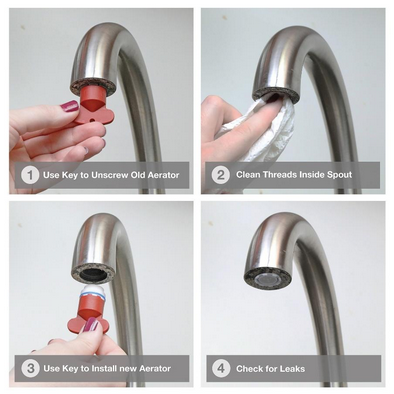
Turn off the faucet and try to unscrew the aerator counterclockwise.
If it doesn’t move easily, don’t force it. Mineral buildup may be holding it in place, and too much pressure could damage the aerator or faucet finish.
If the faucet has a recessed or cache-style aerator, use the correct removal key. Danco offers aerator removal tools designed for compatible aerators.
DIY Tip: Keep the old aerator nearby until you’ve found the correct replacement. Compare its size, threads, and style to help identify the right fit.
Prepare the Connection
Should I Clean the Faucet Before Installing a New Aerator?
Yes. After removing the old aerator, inspect and clean the faucet threads.
Mineral deposits or debris around the threads can prevent the new aerator from seating correctly and may cause leaks.
Use a soft brush to remove loose buildup. For stubborn mineral deposits, white vinegar can help loosen the buildup.
Cleaning the connection before installation can help prevent problems later.
Installation Steps
How Do I Install a New Faucet Aerator?
Once you’ve confirmed that you have the correct aerator:
Avoid overtightening. Extra force doesn’t necessarily create a better seal and could damage the aerator, washer, or faucet threads.
For many installations, hand-tightening is all that’s needed.
Test the Repair
How Do I Check If the Aerator Is Installed Correctly?
After installation, slowly turn on the faucet and check these three things:
Testing the faucet right away can help you spot a small installation issue before assuming a larger plumbing problem.
Installation Troubleshooting
What Should I Do If the New Faucet Aerator Doesn’t Fit?
If the aerator doesn’t thread onto the faucet easily, don’t force it.
Check for:
Incorrect thread type
Incorrect aerator size
Hidden or cache-style aerator
Damaged faucet threads
Need for a faucet adapter
That is why checking the existing aerator before buying a replacement matters.
If the replacement isn’t a direct fit, explore Danco’s faucet adapters or use Danco’s Plumbing 101 resources for additional DIY guidance.
Water Efficiency
Can a New Faucet Aerator Help Save Water?
Yes. Choosing a lower-flow aerator can reduce water use at the sink without requiring an entirely new faucet.
The key is choosing the appropriate flow rate for how the faucet is used. For example, a bathroom sink used primarily for handwashing generally doesn’t need the same water volume as a faucet regularly used to fill large containers.
Choose the flow rate based on the task to balance water efficiency with practical everyday performance.
Aerator Maintenance
How Do You Keep a Faucet Aerator Working Properly?
 Check and clean the aerator periodically to help maintain consistent faucet performance.
If the stream becomes weaker or uneven, remove the aerator and look for mineral deposits or debris.
A simple rinse and brushing may be enough. For heavier mineral buildup, soaking removable components in white vinegar can help loosen deposits.
Regular maintenance may restore normal faucet performance without unnecessary replacement—fix it, don’t replace it.
Find Your Solution
Find the Right Faucet Aerator for Your Repair
Replacing a faucet aerator doesn’t have to mean replacing the entire faucet.
First, check the aerator’s size, thread type, flow rate, and condition. This helps you decide whether cleaning is enough or you need a replacement part.
Choosing the right aerator can help restore smooth water flow, reduce splashing, and improve water efficiency with a simple DIY repair.
Explore Danco’s faucet aerators or browse faucet repair parts to find the right solution for your project.
FAQs
Frequently Asked Questions About Faucet Aerator Installation
Can You Install a Faucet Aerator Yourself?
Yes. Replacing a faucet aerator is a DIY repair many homeowners can complete in just a few minutes. Before buying a replacement, check the size and thread type of the existing aerator.
Why Is the Faucet Leaking After Installing a New Aerator?
Check that the washer or gasket is positioned correctly, the aerator is threaded evenly, and the connection is snug without being overtightened.
What Should You Do If a Faucet Aerator Won’t Come Off?
Mineral deposits can make an aerator difficult to remove. Use the appropriate aerator removal tool or key instead of forcing it and risking damage to the faucet finish.
Should You Clean or Replace a Faucet Aerator?
If the aerator is clogged with mineral deposits or debris, cleaning may restore normal flow. If the screen, threads, or internal parts are damaged, replacement may be the better solution.
How Do You Know What Faucet Aerator Size You Need?
Remove the existing aerator and check its size and thread type before buying a replacement. For hidden aerators, check the cache size and make sure you have a compatible removal key.
Why Is the Faucet Flow Still Low After Replacing the Aerator?
First, check that the new aerator has an appropriate GPM and isn’t blocked by debris. If the flow remains low, the problem may be elsewhere in the faucet or plumbing system.
Find the Right Faucet Aerator for Your Repair
Explore Danco’s faucet aerators and repair parts to restore smooth water flow, reduce splashing, and improve water efficiency.