
How Does Mobile Home Plumbing Differ?
If you live in a mobile or manufactured home, the plumbing may look similar to what you would find in a traditional site-built home. Both systems bring in clean water and carry wastewater out, but a few important differences are helpful to understand before starting a repair.
Mobile homes can use different plumbing layouts, fixture sizes, connections, and replacement parts. That means a faucet, drain, or other plumbing part common in a traditional home may not always fit a mobile home.
The good news is that many common mobile home plumbing problems can still be handled as DIY repairs. Understanding how your plumbing is set up can help you identify the problem, find the right mobile home plumbing parts, and repair what you need without replacing more than necessary.
Jump To Section
Key Differences
How Is Mobile Home Plumbing Different?
Mobile homes are designed to use available space efficiently, and their plumbing systems are built with that same goal in mind. While they perform the same basic functions as plumbing in a traditional home, pipes, fixtures, and connections may be arranged differently.
Some of the biggest differences include:
Plumbing pipe materials
Pipe locations and accessibility
Faucet and fixture configurations
Tub and shower dimensions
Drain and connection sizes
Replacement-part compatibility
These differences don’t necessarily make mobile home plumbing more difficult to repair. They simply mean it’s worth taking a closer look at your existing setup before buying a replacement part. A few measurements and compatibility checks upfront can make the repair process much smoother.
Pipe Materials
What Types of Plumbing Pipes Are Used in Mobile Homes?
The type of plumbing pipe in a mobile home can depend on the home’s age and whether the plumbing has been updated over the years. Older mobile homes may have copper or different types of plastic supply lines, while many newer manufactured homes use flexible plumbing materials such as PEX.
Why does this matter? Different pipe materials can require different fittings, connectors, and repair methods. A connector designed for one pipe type may not fit or seal properly for another.
Before starting a repair, check the existing pipe material and make sure the replacement fitting or connector is compatible. Taking a little time to identify what you have can help prevent leaks and save you from buying a part that doesn’t work with your plumbing.
Pipe Accessibility
Where Are Mobile Home Plumbing Pipes Located?
Plumbing locations can also differ in a mobile home. In traditional homes, pipes may run through walls, floors, basements, or crawl spaces. Because mobile homes have a more compact structure, some supply and drain lines may run underneath the home.
If you notice water around a kitchen or bathroom fixture, take a moment to trace where it’s coming from before assuming the fixture itself needs to be replaced. Check accessible supply connections, drain connections, and nearby plumbing lines for moisture.
Finding the source first saves time, prevents unnecessary replacement, and makes it easier to determine exactly what needs repair.
Faucet Compatibility
Are Mobile Home Faucets Different From Regular Faucets?
Mobile home faucets can differ from faucets commonly installed in traditional homes, but the differences aren’t always obvious at first glance. Kitchen, bathroom, and tub/shower faucets may use different mounting configurations, spacing, stems, handles, or supply connections.
Before choosing a replacement, use your existing faucet as a guide. Take a closer look at:
The number of faucet holes
The distance between mounting points
How the water supply lines connect
The faucet’s overall dimensions
The existing fixture configuration
A replacement faucet doesn’t have to look exactly like the old one, but the key connection points and measurements must match your existing setup. Checking these details before shopping can help you narrow down your options and make installation much easier.
For bathroom repairs, you can also compare your existing fixture with Danco’s Mobile Home/RV bathroom plumbing parts to find a solution that fits your setup.
Choosing a Replacement
How Do You Choose the Right Mobile Home Faucet?
The easiest place to start is with the faucet that’s already installed. Before removing it, take a few photos from above and underneath the sink so you have a clear reference for the faucet layout and water supply connections.
Next, measure the distance between the mounting points and check how the supply lines attach. These details matter most with tub and shower faucets, where the distance between connections can determine whether a replacement will fit. Danco offers mobile home tub and shower faucet configurations in different sizes, including 4-inch and 8-inch options.
Instead of choosing a new faucet based only on style or appearance, look for one that fits your existing plumbing configuration. A few minutes spent checking measurements and connections before shopping can save time during installation and help you avoid bringing home the wrong part.
Tub and Shower Fixtures
Are Mobile Home Bathtubs and Showers Different?
Yes, they can be, and this is another area where taking a few measurements before starting can make a big difference. Because mobile homes are designed to use available space efficiently, bathtubs and showers may be shorter, narrower, or shallower than fixtures commonly found in traditional homes.
The differences can also extend beyond the tub or shower itself. Faucets, drains, shower arms, tub spouts, stoppers, and other components may use specific dimensions or connection configurations.
Before replacing one of these parts, look closely at how the existing component is installed and measure the relevant openings, spacing, and connection points. Even when a replacement looks similar, small differences in size or configuration can affect whether it fits properly.
You can explore Danco’s Mobile Home/RV bathroom parts to compare tubs, showers, sinks, drains, and other repair solutions with your existing setup.
Part Compatibility
Can You Use Regular Plumbing Parts in a Mobile Home?
In some cases, yes. Mobile homes can use certain plumbing components that share common residential sizes, while other fixtures and connections are designed specifically for mobile or manufactured homes.
That’s why it helps to compare the replacement part with what you already have, rather than relying only on appearance. Before buying, check the size, connection type, threads, mounting configuration, drain opening, and faucet spacing. Small differences in any of these details can affect how well the new part fits and functions.
Whenever possible, keep the old part with you while shopping or take clear photos and measurements for comparison. This gives you something specific to match against and can make finding the right replacement much easier.
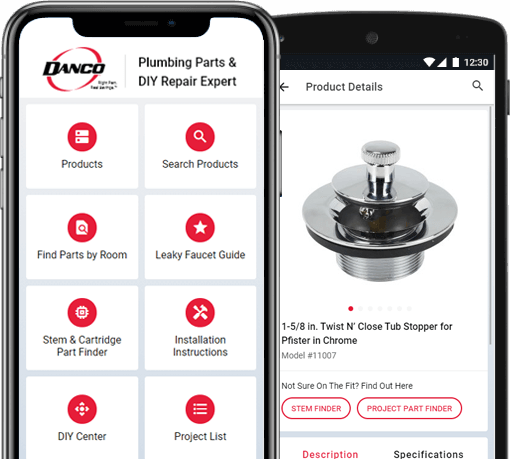
DIY Tip: If you’re not sure which replacement part matches your setup, Danco’s Find Parts tool can help narrow down your options and point you toward the right repair solution.
Repair Preparation
What Should You Check Before Starting a Mobile Home Plumbing Repair?
A little preparation can make a DIY plumbing repair easier and help prevent unnecessary work. Before taking anything apart, spend a few minutes identifying the problem, documenting the existing setup, and checking the measurements you’ll need for a replacement.
DIY Plumbing Projects
What Mobile Home Plumbing Problems Can You Fix Yourself?
Many common mobile home plumbing repairs are DIY-friendly once you’ve identified the source of the problem and found the correct replacement part. Starting with the worn or damaged part can often make the repair simpler and more affordable than replacing an entire fixture.
Common DIY projects may include:
Replacing faucet handles
Replacing kitchen or bathroom faucets
Repairing or replacing drain stoppers
Replacing showerheads
Replacing tub spouts
Repairing sink strainers
Replacing worn washers or seals
The key is knowing what is actually causing the problem before you begin. If a repair involves damaged pipes, extensive water damage, a hidden leak, or work you’re not comfortable handling, a qualified plumbing professional can help make sure the problem is addressed safely and correctly.
Simpler Plumbing Repairs
How Can You Make Mobile Home Plumbing Repairs Easier?
One of the easiest ways to simplify a plumbing repair is to avoid replacing more than necessary. Many everyday plumbing problems stem from a single worn, damaged, or clogged component rather than the entire fixture.
If a faucet handle breaks, for example, you may only need a replacement handle rather than a new faucet. If a sink won’t hold water, the problem could be a worn or damaged stopper instead of the entire drain assembly. A showerhead with weak or uneven flow may just need cleaning or replacement, not changes to the rest of the shower plumbing.
Taking the time to identify the specific problem first can help you choose a simpler repair, save time and money, and extend the life of the plumbing that’s already in place.
Danco’s Mobile Home/RV plumbing parts include replacement solutions for a range of common DIY repairs.
Find Your Solution
How Do You Find the Right Mobile Home Plumbing Part?
Finding the correct replacement part is one of the most important steps in a successful mobile home plumbing repair. Instead of starting with a part that simply looks similar, use the existing fixture or component as your reference.
Before buying, check:
What needs to be repaired
The size of the existing part
How the part connects
Whether it’s designed for mobile home use
Whether the replacement matches the existing configuration
Photos, measurements, model numbers, and manufacturer markings can make identification easier. The more information you have about the existing part, the easier it is to compare your options and find a compatible replacement.
Danco offers Mobile Home/RV plumbing solutions for bathroom, kitchen, and other common repair projects, including faucets, drains, stoppers, shower components, fittings, and other replacement parts.
If you’re unsure which part you need, use Danco’s Find Parts tool to narrow your options by project and product type.
Taking a few minutes to identify the right part before you start can make the repair easier and help you finish without replacing more than necessary.
FAQs
Frequently Asked Questions About Mobile Home Plumbing
Is Mobile Home Plumbing the Same as Regular Home Plumbing?
Not exactly. The basic job of the plumbing system is the same, but mobile homes can use different layouts, fixture dimensions, connections, and replacement parts. Checking your existing setup before purchasing a replacement can help ensure the new part is compatible.
How Do You Know If a Plumbing Part Will Fit a Mobile Home?
Start by comparing the replacement part’s dimensions, connections, thread type, and mounting configuration with the existing part. Taking photos and measurements before shopping gives you a useful reference and can make it easier to find the correct replacement.
Can You Replace a Mobile Home Faucet Yourself?
Many mobile home faucet replacements are DIY-friendly if you have the right replacement and are comfortable with basic plumbing repairs. Before starting, check the mounting configuration and supply connections, and always shut off the appropriate water supply.
Why Is a Mobile Home Faucet Leaking?
A leaking faucet doesn’t always mean you need a completely new faucet. Worn washers, seals, stems, cartridges, or loose connections may be responsible. Start by checking where the water is coming from so you can determine which part actually needs attention.
Are Mobile Home Tubs and Showers Standard Sizes?
Not always. Mobile home tubs and showers can have different dimensions and plumbing configurations than fixtures found in traditional homes. Measure the existing fixture, openings, and connection spacing before choosing replacement parts.
Where Can You Find Replacement Plumbing Parts for a Mobile Home?
Explore Danco’s Mobile Home/RV plumbing parts to compare solutions for common mobile home repairs. If you’re not sure what you need, the Find Parts tool can also help narrow down the right replacement for your project.
Find the Right Mobile Home Plumbing Part
Explore Danco’s Mobile Home/RV plumbing parts or use Find Parts to identify the right solution for your next DIY repair.